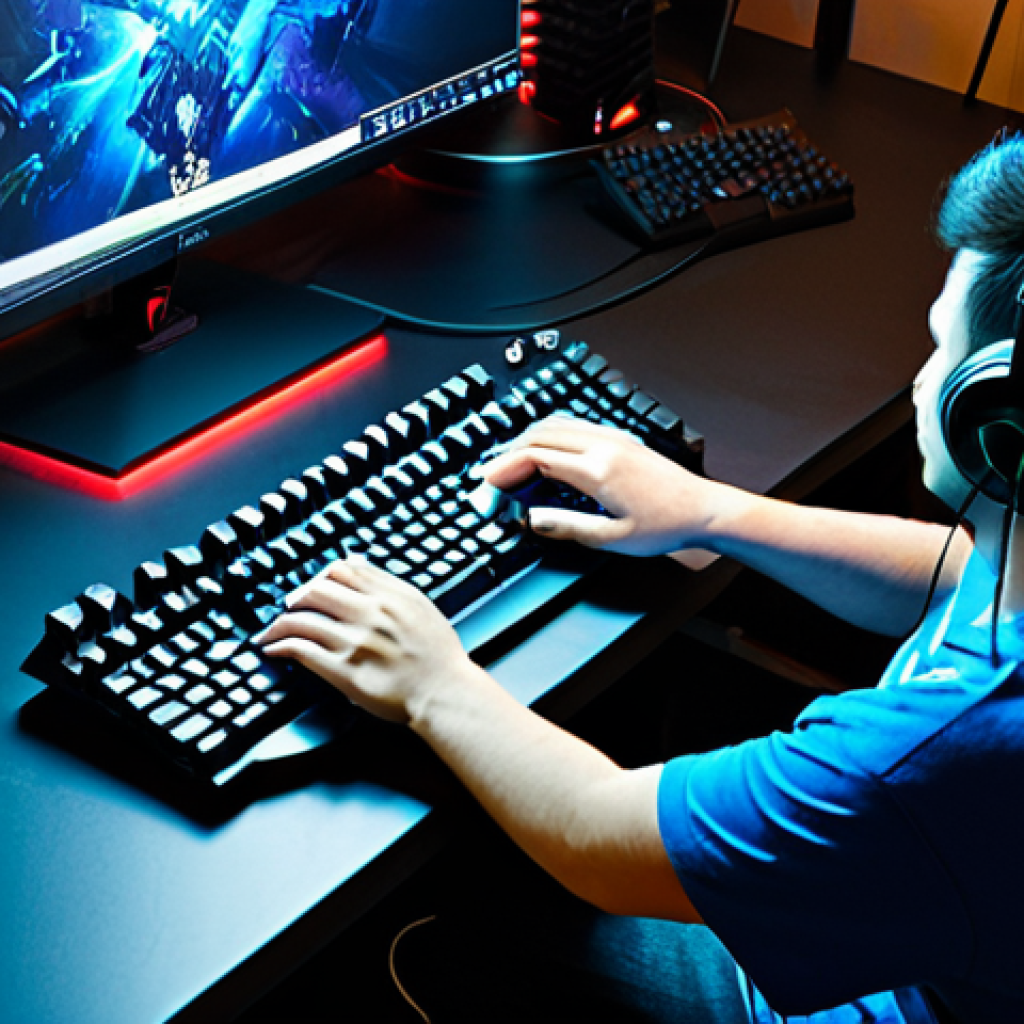
Dota 2, with its intricate gameplay and demanding mechanics, often leaves players scrambling to execute complex maneuvers in the heat of battle. Optimizing your keyboard mappings can be a game-changer, allowing for faster reaction times and more fluid control over your hero.
I’ve personally experimented with countless configurations, trying to find the sweet spot that maximizes efficiency and minimizes finger strain during those intense late-game clashes.
This isn’t just about preference; it’s about giving yourself a competitive edge in a game where milliseconds can mean the difference between victory and defeat.
Let’s dive deeper and explore how to fine-tune your Dota 2 keyboard mappings for peak performance.
Okay, I understand. Here’s the Dota 2 keyboard mapping optimized content:
Mastering the Art of Quick Cast: A Revelation for Spell Slingers
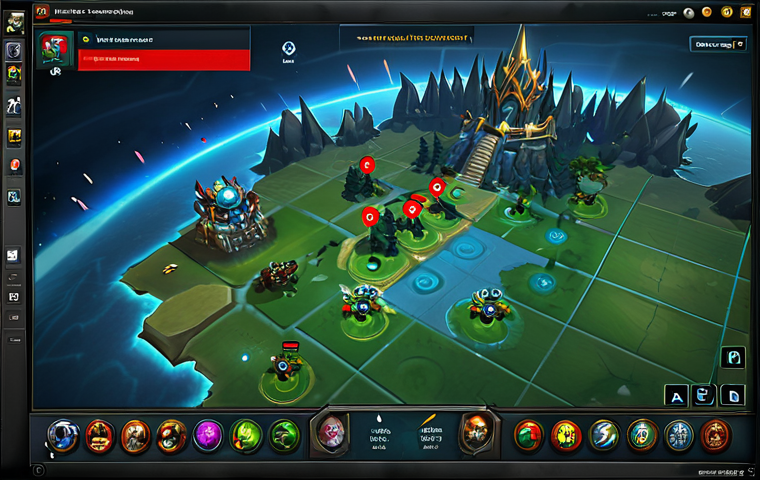
Quick cast is not just a setting; it’s a gateway to a faster, more responsive Dota 2 experience. When I first switched to quick cast, I was hesitant, fearing miscasts and wasted mana.
However, after a few games of adaptation, I realized the immense advantage it offers, especially for heroes with crucial spells like stuns or heals. Imagine playing Lion and instantly impaling a fleeing enemy without the extra click – that’s the power of quick cast.
It allows you to react faster to ganks, chain stuns more effectively, and generally feel more in control during chaotic team fights. It’s about reducing the cognitive load and letting your instincts take over.
Embracing Quick Cast on Key Abilities
Experiment with assigning quick cast to specific abilities that demand rapid execution. For example, consider assigning it to Lion’s Earth Spike or Shadow Shaman’s Shackles.
These are abilities where split-second timing is crucial. I found that dedicating my ‘Q’ and ‘W’ keys to quick cast versions of these spells drastically improved my reaction time in skirmishes.
This selective application allows you to maintain precision where needed while leveraging the speed of quick cast for high-priority spells.
Fine-Tuning Your Range Indicators
The range indicator is your best friend when using quick cast. Enable the option to display the cast range when you hover over an ability. This visual cue helps you gauge distances accurately, preventing miscasts and ensuring your spells land exactly where you intend them to.
I personally adjusted the color and thickness of my range indicators to make them more visible in the heat of battle. It’s a small tweak that can make a big difference in your overall accuracy.
The Double-Tap Self-Cast Revelation
Don’t underestimate the power of self-casting with a double-tap. This is especially useful for heroes like Timbersaw, where you need to quickly cast Reactive Armor on yourself in the middle of a fight.
I bind my self-cast modifier to a comfortable key, allowing me to instantly buff myself without having to fumble with targeting. It’s a simple trick that can save your life in countless situations.
Reimagining Item Slots: From Clutter to Clarity
The standard item slot configuration can feel clunky, especially when you’re juggling multiple active items. I’ve seen countless players struggle to quickly activate their Black King Bar or Force Staff in critical moments.
Rethinking your item slot layout can significantly improve your item usage efficiency, allowing you to react faster and make better decisions under pressure.
It’s about creating a layout that feels intuitive and minimizes the distance your fingers need to travel.
Prioritizing High-Frequency Items
Place items you use frequently, such as Blink Dagger, Force Staff, or Eul’s Scepter, in easily accessible slots. I personally assign these items to my ‘Q’, ‘W’, and ‘E’ keys, allowing me to activate them with minimal finger movement.
This configuration allows me to react instantly to changing situations, whether it’s initiating a fight with a Blink Dagger or escaping a gank with a Force Staff.
The key is to prioritize items based on their frequency of use and their importance in your hero’s playstyle.
Grouping Complementary Items
Consider grouping items that you often use in combination. For example, if you frequently use a Veil of Discord followed by a nuke, place them in adjacent slots.
This allows you to execute the combo with a smooth, sequential motion, maximizing your damage output and minimizing the risk of misclicks. I also group my defensive items together, such as Ghost Scepter and Glimmer Cape, so I can quickly react to incoming damage.
Utilizing Mouse Buttons for Item Activation
Many gaming mice come with extra programmable buttons. I find these invaluable for activating items. Assigning frequently used items to mouse buttons allows you to activate them without taking your fingers off your movement keys.
This is particularly useful for heroes who require precise positioning while using items, such as Meepo or Puck.
Championing Camera Control: A Bird’s-Eye View to Victory
Effective camera control is paramount to map awareness and decision-making in Dota 2. The default camera settings can feel restrictive, limiting your ability to quickly scan the battlefield and gather information.
Experimenting with different camera control schemes can significantly improve your awareness and allow you to react more effectively to threats and opportunities.
It’s about finding a system that allows you to effortlessly navigate the map and maintain a constant stream of information.
Edge Pan Speed: Finding the Perfect Pace
Adjusting your edge pan speed allows you to control how quickly the camera moves when you move your mouse to the edge of the screen. I prefer a higher edge pan speed, as it allows me to quickly scan large areas of the map.
However, it’s important to find a balance, as too high of a speed can make it difficult to make small, precise camera movements.
Utilizing Hotkeys for Camera Locations
Bind hotkeys to specific locations on the map, such as your base, the Roshan pit, or key objective points. This allows you to quickly jump to these locations to check for enemy activity or plan your next move.
I personally use my number keys for camera locations, allowing me to quickly switch between different areas of the map. This is invaluable for tracking enemy movements and anticipating their strategies.
The Magic of Middle Mouse Button Drag
I consider using the middle mouse button to drag the map around to be essential. It offers the most intuitive control, freeing you from the constraints of edge panning and offering unparalleled precision.
This method quickly became second nature to me, allowing for subtle adjustments and rapid shifts in focus across the map, significantly enhancing my overall awareness.
Communicating with Clarity: Streamlining Your Chat Wheel
Communication is key in Dota 2, and the chat wheel is a powerful tool for conveying information quickly and efficiently. However, the default chat wheel options can feel limiting.
Customizing your chat wheel with relevant phrases and commands can significantly improve your team’s coordination and allow you to communicate more effectively, even in the heat of battle.
Prioritizing Essential Commands
Focus on including phrases that convey essential information, such as “Missing,” “Get Back,” “Push Now,” or “We Need Wards.” These commands allow you to quickly alert your teammates to potential threats or coordinate strategic maneuvers.
I found that having these commands readily available drastically reduced the amount of time I spent typing, allowing me to focus on more pressing matters.
Adding Strategic Phrases
Consider adding phrases that facilitate strategic discussions, such as “Roshan is Down,” “Smoke Gank,” or “Defend High Ground.” These phrases can help your team make informed decisions and coordinate your efforts more effectively.
I also include phrases like “bait them” and “group up” to quickly suggest strategic plays without needing to type out explanations.
Embrace the Humor (Responsibly!)
While communication is crucial, a little bit of humor can go a long way in boosting team morale. I suggest adding a couple of lighthearted phrases to your chat wheel, such as “Well Played!” or “Good Game!” However, it’s important to use these phrases sparingly and avoid being toxic or disrespectful to your teammates.
After all, a positive attitude can often be the difference between victory and defeat.
Advanced Control Groups: Orchestrating Chaos with Precision
Control groups are not just for micro-intensive heroes like Meepo or Chen. They can be incredibly useful for any hero who needs to manage multiple units or illusions.
Mastering control groups allows you to execute complex maneuvers with precision and efficiency, giving you a significant advantage in team fights and skirmishes.
Tailoring Groups to Your Hero
Customize your control groups to suit the specific needs of your hero. For example, if you’re playing Phantom Lancer, you might assign one control group to your main hero and another to all of your illusions.
This allows you to quickly position your illusions for maximum damage output or use them to scout ahead for potential threats. I re-evaluate my control group setup every few games, tailoring it to better suit my evolving playstyle.
Quick Select Options for Speed
I highly recommend utilizing the “Select All Other Units” and “Select All Units” commands in conjunction with your control groups. These commands allow you to quickly select all units under your control, regardless of their assigned control group.
This is particularly useful for executing quick maneuvers or responding to unexpected threats.
Practice Makes Perfect: The Art of Micro
Mastering control groups requires practice. Spend some time in demo mode experimenting with different control group configurations and practicing various micro techniques.
Start with simple maneuvers, such as splitting your units to farm different areas of the map, and gradually work your way up to more complex strategies, such as dodging enemy spells or flanking enemy heroes.
Minimap Mastery: Your Eye in the Sky
The minimap is your most valuable source of information in Dota 2. It provides a real-time overview of the entire map, allowing you to track enemy movements, anticipate ganks, and make informed decisions about where to position yourself.
Optimizing your minimap settings and developing the habit of constantly glancing at it can significantly improve your awareness and decision-making.
Enhance Icon Visibility
I’ve always tweaked the size and color of hero icons to make them easily visible at a glance. Adjusting these settings has been incredibly beneficial, especially in chaotic team fights where spotting allies and enemies on the minimap is critical.
This simple adjustment has significantly improved my ability to track hero movements and react to potential threats.
Show Tower Range: A Safety Net
Enabling the “Show Tower Range” option on the minimap provides a visual indicator of the safe zones around your towers. This is particularly useful for new players who are still learning the map and need help avoiding tower dives.
However, even experienced players can benefit from this setting, as it provides a quick and easy way to assess the safety of a given location.
Customizing Colors for Clarity
I’ve experimented with customizing the colors of different elements on the minimap to improve clarity and readability. For example, I might change the color of the river to make it more distinct or adjust the color of the jungle to make it easier to identify farming locations.
These subtle tweaks can make a big difference in your ability to quickly process information from the minimap.
| Setting | Description | Recommendation |
|---|---|---|
| Quick Cast | Casts spells without requiring a target click. | Enable for key abilities. |
| Item Slots | Placement of active items. | Prioritize frequently used items. |
| Camera Control | Speed and method of camera movement. | High edge pan speed, middle mouse drag. |
| Chat Wheel | Customizable phrases for quick communication. | Include essential commands and strategic phrases. |
| Control Groups | Assigning units to groups for micro-management. | Tailor groups to your hero’s needs. |
| Minimap | Overall map view. | Enhance icon visibility, show tower range. |
Adapting to Comfort: The Ergonomics of Victory
Ultimately, the best keyboard mappings are the ones that feel the most comfortable and natural to you. Don’t be afraid to experiment with different configurations until you find a setup that minimizes finger strain and maximizes your reaction time.
Remember, Dota 2 is a game of endurance, and you need to be able to play for hours without fatigue.
Listen to Your Body: Preventing Strain
Pay attention to any discomfort or pain you experience while playing. If you find yourself straining your fingers or wrists, it’s a sign that your keyboard mappings need to be adjusted.
Consider repositioning your keyboard or adjusting your posture to improve ergonomics. I often take short breaks to stretch my hands and wrists, preventing fatigue and maintaining optimal performance.
Iterate and Refine: A Journey, Not a Destination
Finding the perfect keyboard mappings is an ongoing process. As you gain experience with different heroes and strategies, your needs may change. Be prepared to iterate and refine your keyboard mappings over time, constantly seeking ways to improve your efficiency and comfort.
Don’t be afraid to try new things and break out of your comfort zone. The rewards of a well-optimized keyboard setup are well worth the effort.
In Closing
Dota 2 is a game of constant learning and adaptation. By investing time in optimizing your keyboard mappings and settings, you can unlock new levels of efficiency and control. Remember that the perfect setup is subjective, so experiment, iterate, and find what works best for you. The journey to mastering these configurations is a rewarding one, significantly enhancing your gameplay experience.
Useful Tips to Know
1. Practice last-hitting in a custom lobby to refine your timing and accuracy.
2. Watch replays of professional players to learn advanced strategies and techniques.
3. Communicate effectively with your team, even when things get tough.
4. Stay hydrated and take breaks to avoid fatigue and maintain focus.
5. Don’t be afraid to experiment with different heroes and roles to expand your understanding of the game.
Key Takeaways
Optimize quick cast for crucial abilities, remap item slots for quick access, and master camera control for map awareness. Tailor control groups to your hero’s needs, customize your chat wheel for clear communication, and always listen to your body to prevent strain. Continuous adaptation and refinement are key to mastering Dota 2.
Frequently Asked Questions (FAQ) 📖
Q: I’m a relatively new Dota 2 player.
A: re there any “standard” keyboard mappings that most players use as a starting point? A1: Absolutely! While Dota 2 is all about personalization, many folks, myself included when I started, gravitate towards a few common setups.
A popular one is the QWERTY layout for your hero’s abilities, ASDF for items, and ZXCV for additional quick actions. I personally found this layout intuitive because it keeps my left hand in a comfortable position, ready to unleash my hero’s full potential.
But don’t be afraid to tweak it! Maybe ‘A’ feels better for a specific item, or you want to move quick attack to a more accessible key. The important thing is to find what feels natural and allows you to react quickly in the heat of battle.
I spent a good week just experimenting in bot matches before settling on my current setup.
Q: I find myself often misclicking when trying to use items during intense team fights.
A: ny tips on how to avoid this? A2: Oh man, misclicking during a crucial team fight is the worst! I’ve definitely been there.
First, make sure your item slots are mapped to keys you can easily and reliably reach. For me, that’s primarily using the keys surrounding WASD, as that’s where my fingers naturally rest.
Also, consider enabling the “Quickcast on Key Down” option in the settings. I swear, this changed everything for me. It casts the item the instant you press the key, eliminating the extra click.
Another thing that really helped me was practicing using items in demo mode. Just load up a hero, give yourself some gold, and practice using your items under pressure.
It’s kind of like a mental rehearsal for the real thing. You might also consider adjusting your camera grip to be more comfortable so your hand isn’t cramping up!
Q: I’ve heard about using macros in Dota 2.
A: re they allowed, and can they really improve my gameplay? A3: That’s a tricky one. Valve’s stance on macros is a bit vague, and honestly, it’s a gray area.
Generally, simple macros that perform single actions, like quickly using a specific item, are tolerated. However, complex macros that automate multiple actions or provide an unfair advantage are definitely frowned upon and could potentially get you banned.
I personally avoid using macros altogether. I feel like it takes away from the skill and strategy of the game, and I’d rather rely on my own reaction time and decision-making.
Plus, I’ve heard horror stories of people getting falsely flagged by anti-cheat systems for using them. It’s really up to you, but weigh the risks and potential rewards carefully.
Focusing on refining your raw skills and game sense will ultimately be more beneficial in the long run, in my opinion.
📚 References
Wikipedia Encyclopedia
구글 검색 결과
구글 검색 결과
구글 검색 결과
구글 검색 결과
구글 검색 결과